

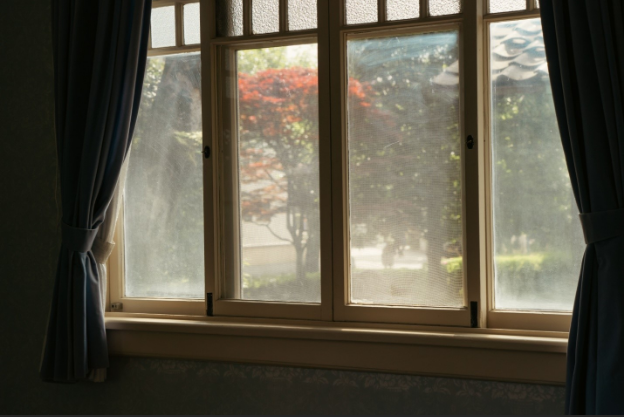
Few things are more frustrating than cleaning a window carefully and still seeing a cloudy film when the light hits it. The haze may be ordinary residue, but it can also come from minerals, coatings, condensation, or moisture trapped where routine cleaning cannot reach.
Successful window cleaning starts by identifying where the cloudiness actually sits. Surface haze should respond to cleaning, whereas a problem within an insulated glass unit will persist even after both accessible sides are spotless.
That distinction prevents repeated scrubbing that will not solve the problem. Before using stronger products or assuming the glass needs replacement, work through the likely causes below:
Key Takeaway
- Cleaning residue and dirty tools can leave a cloudy film.
- Hard-water minerals can create stubborn deposits and eventually etch glass.
- Condensation may appear on either side of the window or between insulated panes.
- Haze that remains unchanged after cleaning both sides may be inside the glass.
- Failed insulated-glass seals generally require glass-unit repair or replacement rather than more cleaning.
Why Windows Look Hazy After Window Cleaning and When the Problem Is Inside the Glass
Cleaning Solution Can Leave a Film
Using too much window cleaning solution can leave surfactant or product residue behind as the glass dries. Instead of appearing crystal clear, the pane may develop a dull film.
The same problem appears during office cleaning on large panes: too much solution can dry before it is fully removed, leaving a thin film that becomes obvious in strong light.
The solution is usually simple: use an appropriate amount of cleaner and remove it thoroughly with clean equipment. Professional window cleaners pay close attention to solution concentration because more product does not necessarily produce cleaner glass.
Dirty Tools Can Put Residue Back on the Glass
A microfiber cloth, washer sleeve, or squeegee rubber can transfer dirt back onto a window if it is worn or contaminated. Detergent residue, dust, grease, and debris from earlier cleaning can all contribute to haze.
Clean glass requires clean tools. If a window repeatedly looks streaky after cleaning, inspecting the equipment can be just as important as changing the cleaning solution.
Hard-Water Deposits Can Cause Cloudiness
Hard water contains dissolved minerals, particularly calcium and magnesium. When water dries on glass, those minerals remain behind and can form white, cloudy, or chalky deposits.
Sprinklers are a common source because repeated water exposure can gradually build mineral deposits. Ordinary window cleaning may remove surface dirt without removing established mineral staining, which is why a window can look clean but remain hazy.
Long-Term Mineral Deposits May Etch the Glass
If mineral deposits remain on glass for a long time, they may cause surface etching. At this stage, the issue is no longer simply material sitting on top of the glass; the surface itself may have been altered.
This is why aggressive scrubbing is not always the answer. Abrasive techniques can scratch glass or damage certain coatings. Persistent mineral haze should be assessed before stronger chemicals or abrasive products are used.
Sunlight Can Reveal Fine Streaks
A window may look clear in ordinary indoor lighting, but suddenly appear streaky when direct sunlight hits it. Strong or low-angle light highlights tiny amounts of residue, water marks, and surface imperfections.
Inspecting the glass from different angles is therefore useful after window cleaning. What looks invisible straight on can become obvious when sunlight crosses the pane.
Screens and Frames Can Recontaminate Clean Glass
Screens, tracks, and frames collect dust, pollen, and outdoor debris. When water runs through these areas, it can carry contaminants back onto freshly cleaned glass.
If haze or streaking appears mainly around the edges or below the frame, the surrounding window components may be contributing to the problem. During a broader deep cleaning, washing screens and tracks before the final glass pass can reduce this recontamination.
Coatings and Window Films Can Affect Appearance
Some windows have low-emissivity coatings, tinting, privacy films, or other treatments. These surfaces may require specific cleaning methods.
A consistent cloudy appearance should not automatically be treated as dirt. Before using abrasive tools or strong chemicals for window cleaning, determine whether the glass has a special coating or film and follow the manufacturer’s care instructions.
Condensation Can Make Glass Look Foggy
Not every cloudy appearance is caused by contamination. Condensation can form when warm, moisture-laden air meets cooler glass. The same pattern is common after showers or bathroom cleaning, when indoor humidity temporarily rises.
If the moisture is on the room-facing surface, it can often be wiped away. Exterior condensation can also occur under the right weather conditions, where the moisture forms matter more than the fact that the window looks foggy.
A useful diagnostic step is simple: wipe the affected area. If the appearance changes immediately, the issue is probably on an exposed surface rather than trapped inside the window.
Haze Between Double-Pane Glass May Mean Seal Failure
The most important distinction is whether the haze is on the glass or between the panes.
Modern double- and triple-pane windows commonly use an insulated glass unit, or IGU. The panes are separated by a spacer and sealed around the perimeter to create an insulating cavity. When that seal deteriorates, moisture can enter the space between the panes and condense on the interior surfaces.
Because this moisture is trapped inside the sealed unit, window cleaning from either the interior or exterior surface cannot remove it.
This is the classic situation where a homeowner says, “I cleaned the window, but it still looks foggy.” If the haze remains in exactly the same location after both accessible surfaces have been cleaned, the problem may not be a cleaning issue at all.
Conclusion
Hazy windows after cleaning can have several causes, and not all of them are related to cleaning quality. Residue, hard-water deposits, sunlight, dirty screens, coatings, and condensation can all affect clarity.
However, if the haze remains unchanged after both accessible surfaces have been cleaned and appears trapped between double or triple panes, a failed insulated-glass seal may be responsible. Identifying the source before taking further action helps protect the glass and ensures the right solution is used.
If surface cleaning does not clear the haze, start with professional window cleaning from 3 LA Cleaning.
FAQs
Can newspaper or paper towels cause window haze?
They can leave lint, ink transfer, or uneven residue depending on the paper and cleaner. A clean microfiber cloth or properly maintained squeegee is usually more predictable.
Should I use an oven cleaning product on mineral haze?
No. Oven cleaning products are formulated for different soils and surfaces. Use only glass-safe products appropriate for the window and any coatings it has.
Why does haze look worse at certain times of day?
Low-angle or direct sunlight highlights fine streaks, residue, mineral spots, and surface imperfections that may be difficult to see under diffuse indoor light.
Can a damaged window film look like dirty glass?
Yes. Aging tint, privacy film, or another surface treatment can appear cloudy or uneven. Confirm whether a film is present before using stronger cleaning methods.
Who should inspect haze that appears between panes?
A qualified window or glass professional can determine whether an insulated glass seal has failed and whether the glass unit can be repaired or needs to be replaced.