

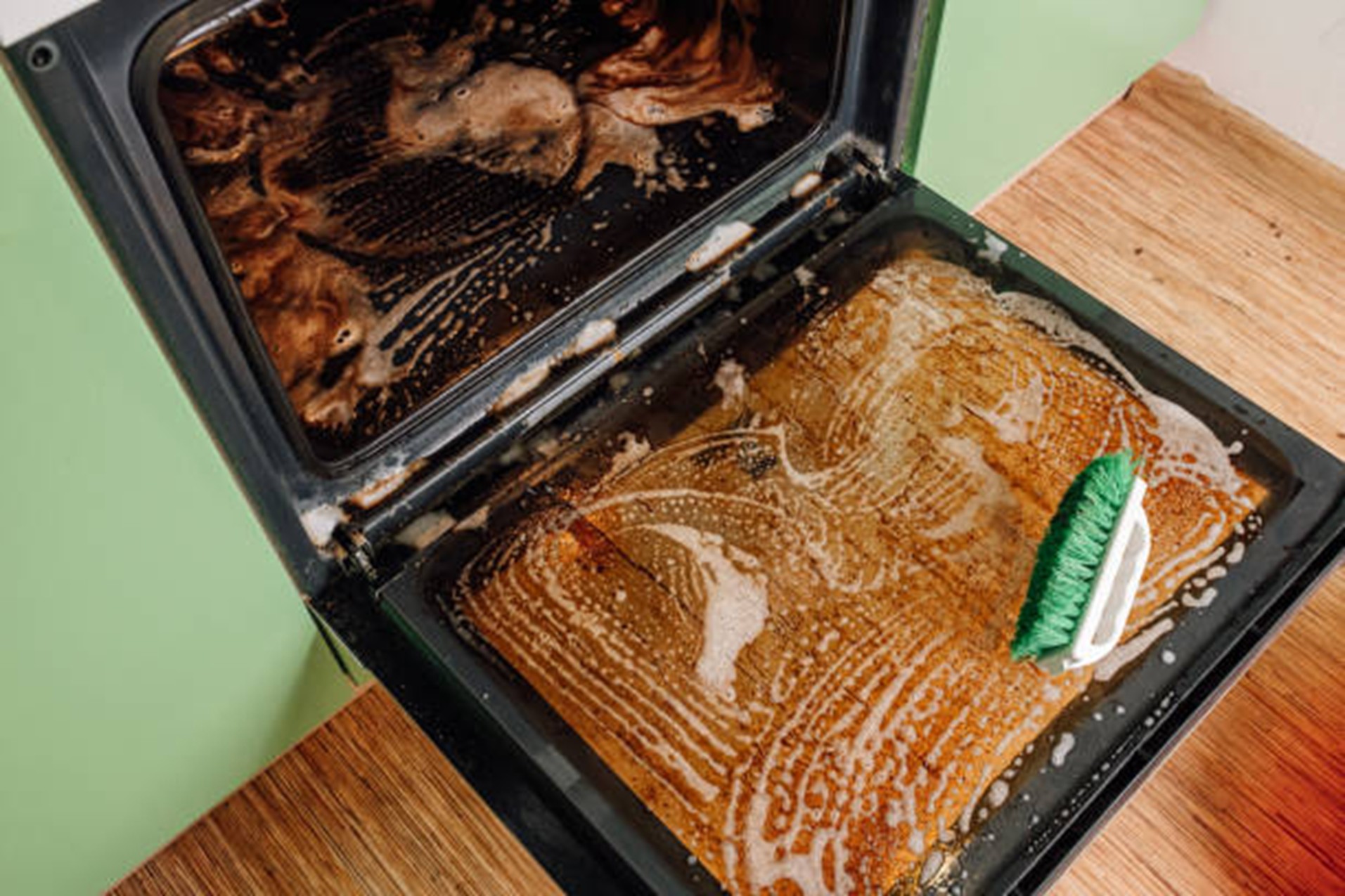
A greasy oven can make even a clean kitchen feel unfinished. Baked-on spills, smoke marks, and hardened grease do more than look unpleasant. They can affect how evenly your oven heats, create burning smells, and make everyday cooking feel less fresh.
The challenge is removing that buildup without scratching the surface or damaging important oven parts. Strong scrubbing pads, sharp tools, and harsh products may seem like quick fixes, but they can leave marks, wear down the enamel, or create lingering chemical odors.
This guide explains safe oven cleaning methods that help remove baked-on grease without scratches. Whether you are keeping up with regular kitchen care or preparing for move-out cleaning, these steps can help you restore your oven without risking surface damage.
Key Takeaways
- Harsh scrubbing pads and metal tools are the leading cause of oven scratches
- Natural cleaning agents like baking soda and vinegar are highly effective on baked-on grease
- Heat-assisted oven cleaning helps loosen stubborn residue safely
- Steam is one of the safest scratch-free cleaning methods
- Commercial cleaners must be used carefully to avoid enamel damage
- Regular light cleaning prevents heavy grease buildup and reduces effort long-term
Methods Of Efficient Oven Cleaning Without Any Scratches
1. Baking Soda Paste for Safe Oven Cleaning
One of the safest and most reliable methods for oven cleaning is using a baking soda paste. Baking soda is a mild alkali that helps loosen grease and baked-on food without scratching enamel-coated oven interiors. Unlike abrasive cleaners or steel wool, it works by softening residue instead of scraping it away.
To make the paste, mix baking soda with a small amount of water until it has a thick, spreadable consistency. Apply it across greasy areas, paying special attention to the oven floor, side walls, and around the door where grease tends to collect. Avoid covering heating elements or vents.
Leave the paste on for at least 8 to 12 hours or overnight if the buildup is heavy. This gives it enough time to break down hardened grease. Once it has dried, wipe it away using a damp microfiber cloth. If some spots remain, apply another thin layer rather than scrubbing aggressively. Repeating the process is much safer than using excessive force that could scratch the surface.
2. Finish With Vinegar to remove the remaining residue
After wiping away most of the baking soda, lightly spray distilled white vinegar over any remaining residue. The vinegar reacts with leftover baking soda, creating a gentle fizz that helps lift stubborn particles from the surface.
Allow the fizzing to settle for a minute or two before wiping everything clean with a damp cloth. This step also removes any white baking soda film that may remain after the first wipe and helps reduce lingering cooking odors.
Although vinegar is useful during oven cleaning, it should not be considered a replacement for baking soda or other cleaners. Instead, it works best as a finishing step that makes the final wipe easier and leaves the oven looking cleaner.
3. Use Steam to Soften Grease Before Wiping
Steam is an effective way to loosen light to moderate grease without using harsh chemicals or abrasive tools. Many modern ovens even include a steam-clean feature that is designed specifically for this purpose.
If your oven does not have one, place an oven-safe dish filled with water inside the oven and heat it according to your manufacturer’s recommendations. As the water heats, steam circulates throughout the oven cavity and helps soften grease that has dried onto the surfaces.
Once the oven has cooled enough to touch safely, wipe the interior with a soft microfiber cloth or non-abrasive sponge. While steam alone may not remove heavily carbonized grease, it can significantly reduce the amount of scrubbing needed and is an excellent first step before using baking soda or another approved cleaner.
4. Try Lemon Steam for Light Grease and Odors
Lemon is a popular natural cleaning option because its citric acid helps loosen light grease while leaving behind a fresh scent. Although it is not strong enough for thick carbonized buildup, it works well for regular maintenance.
Fill an oven-safe baking dish with water and add several lemon slices or fresh lemon juice. Warm the oven until steam begins to form, then switch it off and allow the steam to circulate for several minutes.
After the oven cools, wipe the softened residue away with a soft cloth. This method is ideal if you clean your oven regularly and want to freshen it between deeper cleanings. It can also help reduce cooking odors without relying on artificial fragrances.
5. Clean Glass and Interior Surfaces with Dish Soap
For fresh grease, fingerprints, and everyday cooking residue, warm water mixed with a grease-cutting dish soap is often all you need. This method is gentle enough for regular maintenance and works particularly well on oven doors and glass panels.
Dip a soft sponge or microfiber cloth into the soapy water and wipe the affected areas. Allow the solution to remain on greasy spots for several minutes before wiping again. Giving the soap time to break down grease reduces the temptation to scrub hard.
Avoid using rough scouring pads, steel wool, or sharp tools on oven glass because they can leave permanent scratches. Gentle cleaning performed more frequently is far more effective than allowing grease to build up over time.
6. Use Commercial Oven Cleaners Only When Needed
Sometimes baked-on grease becomes too thick for natural cleaning methods alone. In these situations, a commercial oven cleaner may be the most practical option.
Always read both the cleaner label and your oven manufacturer’s instructions before applying any product. Some ovens, particularly self-cleaning models or those with catalytic liners, should not be cleaned with certain chemical cleaners.
Wear gloves, provide good ventilation, and apply the cleaner only for the recommended amount of time. Allow the product to do the work rather than trying to scrub immediately.
Never mix commercial oven cleaners with vinegar, bleach, ammonia, or any other household cleaning products. Mixing chemicals can create dangerous fumes and may damage oven surfaces.
7. Wipe Everything Down with a Microfiber Cloth
The final wipe is an important part of oven cleaning because it removes loosened grease while protecting the oven’s finish.
Use a clean microfiber cloth to remove any remaining moisture and residue. Microfiber traps grease and tiny food particles within its fibers instead of dragging them across the surface, making it much less likely to leave scratches.
Work from the back of the oven toward the front using light pressure. If the cloth becomes dirty, rinse or replace it instead of continuing to spread grease around the oven.
Taking a few extra minutes during this final step leaves the oven cleaner, reduces streaks, and helps maintain the protective finish over time.
Wrap Up
Successful oven cleaning is not about using the strongest cleaner or scrubbing harder. It is about choosing methods that soften baked-on grease first, making it easier to remove without damaging the oven’s interior. Gentle techniques like baking soda, steam, microfiber cloths, and approved cleaning products help protect enamel surfaces while delivering a thorough clean.
Regular maintenance also prevents grease from building into stubborn, carbonized layers that often tempt people to use abrasive pads or metal tools. By cleaning your oven before heavy buildup occurs, you can keep it looking its best, improve cooking hygiene, and extend the life of the appliance without leaving behind scratches.
If you would rather leave the hard work to the professionals, 3LA Cleaningis here to help. Contact us today to schedule your oven cleaning and enjoy a cleaner kitchen without the risk of scratches.
FAQs
Do office cleaning services include oven cleaning?
Many office cleaning companies offer kitchen and break room cleaning as part of their services. Depending on the cleaning package, this may include degreasing ovens, cleaning microwaves, sanitizing countertops, and maintaining other shared kitchen appliances.
Why is oven cleaning important during move-out cleaning?
A clean oven is one of the areas landlords, property managers, and new homeowners often inspect during move-out cleaning. Removing baked-on grease and food residue can help restore the appliance’s appearance and leave the property in better condition for its next occupant.
Should the same cleaning cloths be used for bathroom cleaning and oven cleaning?
No. It is best to use separate cloths and cleaning tools for bathroom cleaning and kitchen appliances to reduce the risk of cross-contamination. Using dedicated microfiber cloths for the kitchen helps maintain better hygiene and prevents transferring bacteria between different areas of the home.
How often should I perform oven cleaning?
For most households, wiping up spills as they occur and deep oven cleaning every three to six months helps prevent heavy grease buildup.
Does steam remove baked-on grease?
Steam helps soften light to moderate grease and food residue, but heavily carbonized deposits usually require additional cleaning methods.
What usually causes scratches inside an oven?
Scratches are commonly caused by steel wool, metal scrapers, abrasive scouring pads, or applying too much force during cleaning.