

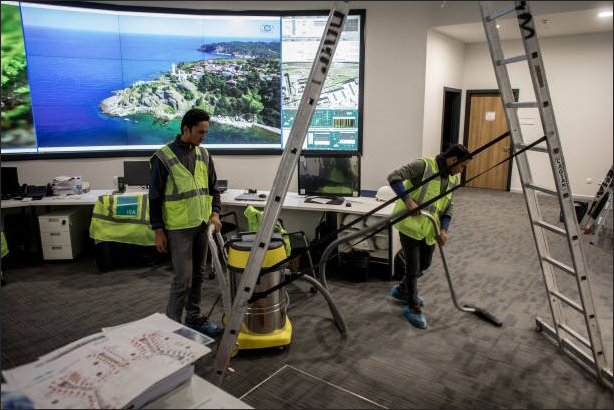
Renovation work may be finished, but that does not mean the office is ready for employees. Fine construction dust can settle on desks, floors, vents, windows, electronics, and other surfaces long after contractors leave. If it is not removed properly, normal movement and HVAC airflow can send those particles back into the air.
That is why office cleaning after renovation requires more than a quick vacuum and wipe-down. The space needs a careful top-to-bottom deep cleaning plan that targets both visible debris and hidden dust. So, what should you clean first, and which areas are easiest to miss? This guide explains exactly what to do before employees return.
Key Takeaways
Post-renovation dust can settle on both visible and hidden surfaces.
Cleaning should generally move from high surfaces down toward the floor.
HEPA-filtered vacuums can help capture fine dust instead of redistributing it.
HVAC vents, returns, and other frequently overlooked areas deserve special attention.
Hard surfaces may require multiple cleaning passes after renovation work.
Professional janitorial cleaning can help businesses prepare the workplace before employees return.
Guide to Office Cleaning Dust Removal After Renovation Before Employees Return
1. Wait Until Construction Work Is Truly Finished
The first step in office cleaning after renovation is confirming that construction activities are complete. Cleaning too early can waste time because additional cutting, drilling, sanding, painting, or installation work can create another layer of dust.
Before beginning the final cleaning, the office should be inspected for remaining construction activity. Contractors should have removed their tools, materials, packaging, and large debris. Any areas that still require repair or installation should be identified so cleaning crews can work around them safely.
This simple coordination step prevents a common problem: thoroughly cleaning an area only to have it covered with dust again during the final stages of construction.
2. Remove Large Debris Before Tackling Fine Dust
Post-renovation cleaning should begin with debris removal rather than detailed surface cleaning. Small pieces of drywall, cardboard, plastic wrapping, wood scraps, tape, and other construction waste can interfere with vacuuming and mopping if they are left on the floor.
Large debris should be collected and disposed of appropriately before detailed cleaning begins. Care should also be taken around sharp materials such as screws, nails, broken tile, and metal fragments.
Once the obvious debris is removed, cleaning professionals can concentrate on the fine particles that are much harder to see but often responsible for the dusty appearance of a newly renovated office.
3. Clean High Surfaces Before Lower Ones
One of the most important principles of post-renovation office cleaning is working from high surfaces downward. Dust that settles on ceiling fixtures, shelving, cabinets, door frames, and other elevated areas can fall onto surfaces below.
Cleaning ceilings, light fixtures, tops of cabinets, wall ledges, and other high areas first allows loosened dust to settle before floors receive their final cleaning.
This approach is especially important in offices with exposed shelving, tall storage units, decorative lighting, or architectural features where dust can accumulate unnoticed. Extension tools and appropriate microfiber cleaning equipment can help reach elevated areas without unnecessarily spreading particles into the room.
4. Use HEPA-Filtered Vacuuming for Fine Dust
A standard vacuum may not be the best choice for every post-renovation office cleaning situation. Fine construction particles can be difficult to capture, and equipment that does not adequately contain fine dust may simply redistribute some of it.
Professional cleaning crews may use commercial vacuums equipped with high-efficiency filtration, including HEPA filtration where appropriate. The objective is to capture fine particles rather than push them back into the air.
Vacuuming should cover more than open floor areas. Baseboards, carpet edges, corners, upholstery, stair areas, under furniture, and other dust-collecting locations should also be addressed.
5. Wipe Walls, Doors, Trim, and Hard Surfaces
Renovation dust does not stay on the floor. It can form a fine film on painted walls, doors, door frames, trim, cabinets, countertops, partitions, and other hard surfaces.
After loose dust has been removed, surfaces can be cleaned using methods appropriate for the specific material. Microfiber cloths are useful for many surfaces because they can pick up fine particles without requiring aggressive scrubbing.
Extra care is necessary with newly painted walls, specialty finishes, glass, natural stone, wood, and other surfaces that may have manufacturer-specific cleaning requirements. Using excessive water or unsuitable chemicals can damage finishes that were just installed.
6. Pay Special Attention to Floors and Carpets
Floor cleaning is one of the most visible parts of post-renovation office cleaning, but it should not be limited to a single pass.
Hard floors may need careful vacuuming followed by damp cleaning to remove the fine residue left behind by construction. Depending on the flooring material and condition, additional treatment may be appropriate.
Carpet can be particularly challenging because fine particles can become embedded in the fibers. Thorough commercial vacuuming should cover the entire carpeted area, including edges and spaces underneath or around furniture. If the renovation involved significant dust or spills, professional carpet cleaning may also be necessary.
The correct process depends on whether the office has carpet, vinyl, tile, laminate, concrete, hardwood, or another flooring material.
7. Clean Air Vents, Returns, and HVAC-Adjacent Areas
Air-handling areas deserve special attention after renovation. Dust can accumulate around supply vents, return grilles, diffusers, and nearby surfaces. If construction dust has entered HVAC components, simply wiping the visible vent cover may not address the underlying issue.
Cleaning crews can remove accessible dust from vent covers and surrounding surfaces. However, HVAC system cleaning or internal ductwork service is a separate specialty and may require qualified HVAC professionals.
Businesses should also consider replacing filters when appropriate and coordinating with their building maintenance or HVAC provider. Keeping these systems clean helps prevent avoidable redistribution of dust after employees return.
8. Clean Windows, Glass, and Window Frames
Renovation projects frequently leave dust, fingerprints, adhesive residue, paint splatters, and other marks on glass and window frames.
Windows should be inspected carefully rather than cleaned only where dirt is obvious. Frames, tracks, sills, handles, and surrounding ledges can collect substantial amounts of dust.
Glass should be cleaned with products and techniques suitable for the office cleaning surface. Paint, adhesive, or construction residue should not be aggressively scraped during window cleaning without confirming that the method is safe for the glass and surrounding finishes.
Wrap Up
A renovated office should feel new when employees walk through the doors, not dusty or unfinished. Proper office cleaning after renovation removes visible debris while addressing the fine particles and overlooked surfaces that can make a newly completed project feel incomplete.
If your office is nearing the end of a renovation project, professional cleaning services with 3 LA Cleaning can help prepare the space for a smooth return to work. Schedule a post-renovation office cleaning service with expert cleaners at 3 Little Angels Cleaning before employees head back to the office.
FAQs
How soon can an office be cleaned after renovation?
Cleaning can generally begin once construction activities that generate dust and debris are finished. The exact timing depends on the project, materials used, paint or coating requirements, and any remaining contractor work.
Is post-construction cleaning different from regular office cleaning?
Yes. Routine janitorial cleaning focuses on maintaining an occupied workplace, while post-renovation cleaning addresses construction debris, fine dust, residue, newly installed surfaces, and areas that may not require frequent cleaning during normal operations.
How many times should an office be cleaned after renovation?
There is no universal number of cleaning passes. Heavily renovated spaces may require multiple stages because fine dust can settle again after initial vacuuming and surface cleaning.
Should HVAC ducts be cleaned after an office renovation?
Not every renovation requires complete duct cleaning. However, vents, returns, filters, and surrounding areas should be inspected. If construction dust has entered the HVAC system, the building’s HVAC professional can determine whether specialized cleaning is appropriate.
Is residential cleaning the same as office cleaning after renovation?
No. Although both may involve dust removal, surface cleaning, and floor care, office cleaning after renovation typically requires commercial-grade equipment and a more structured cleaning process.