

Expansive views, natural light, and a sense of openness are some of the biggest reasons people choose high-rise apartments in Chicago. Higher floors often feel quieter and more private, but they also bring different window cleaning challenges.
While enjoying that view, have you ever noticed something small yet strange? Your windows look clean in the morning, but by afternoon, they seem slightly dull. Not dirty, just not as clear as before.
According to global air quality reports, microscopic particles travel through the air and reach even higher floors. Over time, they settle on glass and create a thin, almost invisible layer. That is where window cleaning becomes essential for maintaining clarity and keeping your space feeling fresh and bright.
Takeaways
- Above the fifth floor, grime often comes from the air—not the street.
- Chicago’s winter salt can quietly coat upper windows in a thin haze.
- Wind patterns between buildings affect how dirt sticks and spreads.
- Sunlight at higher levels exposes even the smallest streaks.
- High-rise cleaning is more about strategy than just effort.
How is High-Rise Window Cleaning Different?
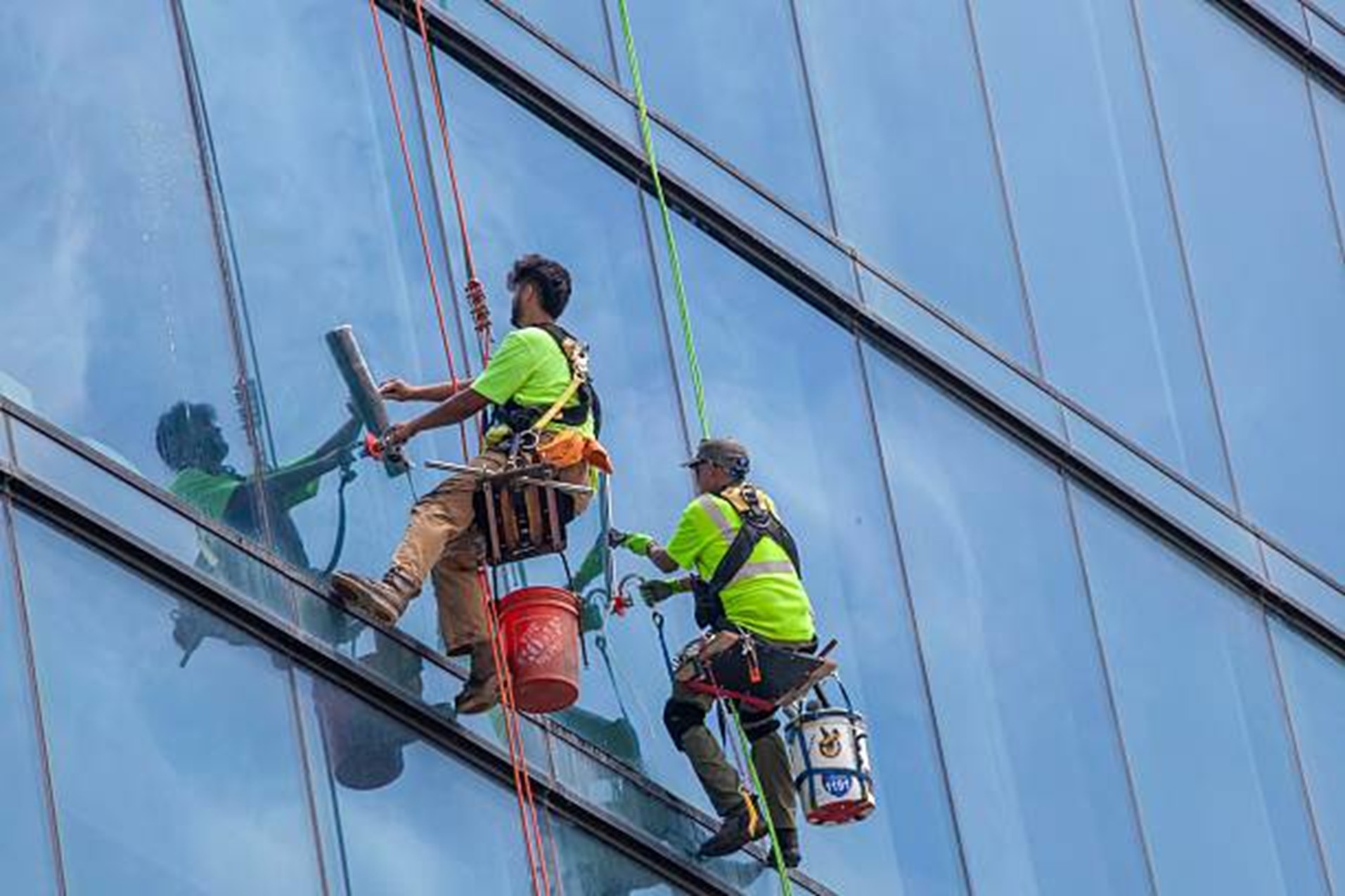
In most high-rise apartments, residents can safely clean the interior side of the glass, frames, and tracks. Exterior window cleaning above the fifth floor is different. It usually requires building-approved professionals, proper equipment, and safety procedures.
This is why high-rise window cleaning depends on access, timing, wind conditions, and building rules, not just cleaning technique.
What Really Changes Above the Fifth Floor in Chicago?
1. Urban Haze Buildup
Now imagine living on the 18th floor in downtown Chicago with no nearby traffic and no visible dust. So, what is actually causing it? It’s not dirty exactly, just a faint haze.
Global air quality tracking reports show that urban pollution events continue to affect major cities, including Chicago.
According to the Chicago Tribune, fine particulate levels have been rising, with averages around 9.7 micrograms per cubic meter, nearly double the World Health Organization’s recommended limit. These particles are extremely small and do not settle like regular dust. Instead, they form a thin, almost invisible layer on glass. That is why window cleaning at height is not just about removing dirt. It is about managing the buildup you cannot easily see but can clearly notice over time.
2. Airflow-Driven Dirt Loading
Above the fifth floor, airflow becomes more important in how dirt settles. In Chicago’s dense skyline, wind speeds increase between buildings, creating pressure zones that push dust and debris toward specific areas. Instead of spreading evenly, particles collect where airflow slows down.
You will often notice heavier buildup along window edges, seals, and recessed panels, while open glass areas stay cleaner longer. This is not random. It is airflow shaping where dirt lands. For apartment residents, this means edges, seals, and recessed areas may need more attention during interior window cleaning. Focusing more effort on high-load areas helps reduce rework and keeps results consistent across the building.
3. Wind Drift and Water Control
At higher levels, wind directly affects how water behaves on the glass. Instead of staying where you apply it, water can drift sideways or get blown off before you remove it properly. This makes even simple cleaning passes harder to control.
If water shifts during a pass, it can leave streaks or uneven edges that are hard to fix. To manage this, you adjust your angle, reduce the amount of solution, and work in smaller sections. Sometimes, slowing down gives you better control than rushing. Conditions can change quickly, so you stay alert throughout the process. Managing wind drift is essential if you want a clean, streak-free finish without having to repeat sections.
4. Rapid Evaporation on Glass
At higher floors, glass surfaces heat up faster because they are more exposed to sunlight and open air. This causes water to evaporate much quicker than it would at ground level. On some days, especially on sun-facing sides, water can dry within seconds.
When that happens, minerals are left behind, creating spots or a dull haze. To avoid this, you need to stay ahead of the drying process. That may mean working faster, switching sides of the building, or starting with shaded areas. While cleaning, adjust your tools and water quality to reduce spotting. Controlling evaporation is just as important as removing dirt when aiming for a clear finish.
5. Airborne Salt Residue Buildup
During Chicago winters, road salt does not stay on the ground. It breaks into fine particles and gets carried into the air by the wind. Over time, these particles settle on windows, even on higher floors.
Once salt lands on the glass, it mixes with moisture, forming a thin layer that sticks to the surface. This buildup is tougher than regular dust and can leave marks if ignored. You might even feel a slight drag when moving your tools across the glass.
To remove it properly, you cannot rely on a quick pass. For deep cleaning, start with a pre-wet to loosen the residue, then use a non-abrasive pad for a controlled scrub. Then rinse thoroughly with purified water to remove any remaining minerals. In some cases, you may need a second pass to fully clear the film and restore clarity without leaving streaks.
6. Sunlight Angle and Streak Visibility
At higher elevations, sunlight hits windows more directly and from sharper angles throughout the day. This does not just change how clean the glass looks. Even small streaks or leftover residue can scatter light, making the surface appear slightly hazy or uneven.
Because of this, a window can look clean from one angle but show marks when the light shifts. This is not always a cleaning mistake. It is simply how sunlight exposes tiny traces left behind after window washing. That is why you need to check your work from different angles before moving on. The goal is to leave the glass looking evenly clean, not just clean from one view.
7. Dirt-Trapping Building Design
Every building has its own design, and that affects how dirt collects on windows. Features like ledges, frames, and recessed panels create areas where debris and moisture can build up more easily.
At higher levels, wind and weather make these areas even more noticeable. Some sections trap dirt, while others dry too quickly, leaving streaks. During high-rise apartment window cleaning, the method should change based on where dirt collects and how quickly the glass dries. That might mean changing your angle, pressure, or cleaning sequence. Understanding how the facade behaves helps you deliver more even and reliable results across the entire building.
8. Limited Access and Movement Control
Above the fifth floor, access becomes a major part of the job. You are working with platforms or rope systems that limit your freedom of movement. This means you cannot treat the job like ground-level cleaning.
Each section has to be done the first time carefully, because going back is not easy. Planning your sequence becomes important, especially when working around weather conditions like wind. If conditions change, work may slow down or stop. This makes high-rise cleaning more structured and controlled. It is not just about technique. It is about timing, coordination, and working efficiently within those limits.
Conclusion
Above the fifth floor, window cleaning works differently in Chicago. Dirt settles unevenly, water behaves unpredictably, and even clean glass can look different under the changing light.
You do not just wipe the glass. You adjust for wind, airflow, drying time, sunlight, residue, and access limitations. Every step requires more control and awareness. When you understand these changes, you deliver results that last longer and look better from every angle.
If you want crystal-clear high-rise results today, contact trusted experts at 3LA Cleaning for professional services.
FAQs
Is deep cleaning really necessary for high-rise windows?
Yes, especially after winter, as it removes stuck residue like salt and pollution that regular cleaning can miss.
Why do high-rise windows look hazy even when they seem clean?
They collect fine airborne particles that form a thin, invisible film, reducing clarity even in the absence of visible dirt.
Why is window cleaning different above the fifth floor?
It requires more planning, control, and real-time adjustments due to changing conditions and limited access.
Does floor cleaning affect window cleanliness in high-rise apartments?
Yes, floor cleaning can stir up fine dust and particles indoors. These can settle on nearby windows over time, especially in areas with airflow or open spaces.
How is residential cleaning different from commercial high-rise window cleaning?
Residential cleaning focuses on smaller spaces and comfort, while commercial high-rise work involves larger buildings, stricter safety rules, and more structured planning.